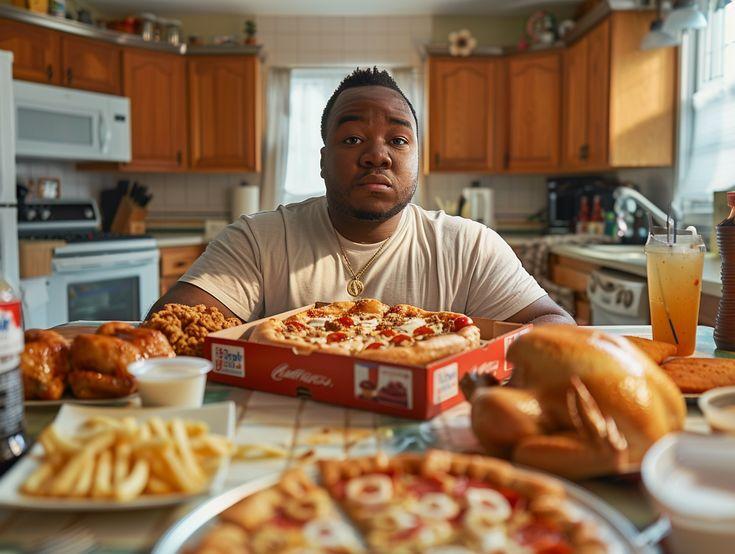
Eating is such a joyous experience in one's life. In every culture, country food is a symbolic sign. It is linked with satisfaction and calmness . Each of the people around the globe have different eating habits, food preferences. Food brings a sense of connection and familiarity among its people. That's why it is very important for us to build a healthy relationship with food. But currently we are living in the social media age where everyone is chasing “ trends”. . A very famous trend emerged in the mid 2017 - 2020 , referred to as “ MUKBANG”, where the idea was people eat large amounts of food in front of the camera, the food usually is of 5-6 people but is eaten alone by one single person .Over time this trend became very popular among youtube. And other social media platforms. The one which started as a trend became part of the people's lifestyle and got converted into eating disorders. A study in Journal of Affective Disorders shows that eating disorder prevalence has been steadily increasing worldwide over decades. A meta-analysis by Faria et al. (2026) reported a global prevalence of approximately 5.23% among children and young people. In this blog, we will address one of the most common eating disorders, BINGE EATING.
Binge eating disorder is when the individual eats large amounts of food in a short time until being uncomfortably full. Everyone overeats occasionally, but binge eating happens often at least once a week or for three months. Binge eating disorder is a diagnosed mental health disorder. It was formally included in the DSM-5 , a key diagnostic manual used by mental health professionals in 2013. Binge eating disorder can affect anyone of any size , but it's mostly prevalent in women, who are in their early to mid 20s.
ETIOLOGY: Many things can affect how and why someone eats in this way. Our emotions, biology, habits all play a key role. Some use binge eating as a way to cope up with their daily life's stresses. For some it's because eating releases pleasure hormones in our brain like dopamine and serotonin and it makes them feel good.
RISK FACTORS: There are certain complications involved for those who binge eat such as obesity, depression, anxiety, substance abuse, distorted body image, indigestion, bloating, metabolic issues and so on.
DIAGNOSING BED: Healthcare providers diagnose the disorder through the criteria listed in the DSM-5, Diagnostic and Statistical Manual of Mental Disorders.
There's no quick fix for binge eating disorder. The focus is more in building a healthier lifestyle, adapting to have a balanced relationship with eating and food. In this, Psychotherapy helps a lot to build a stronger, healthier relationship with food again. In some cases even medications are prescribed . Recovery is possible with the right care. It starts with taking small steps each day, such as:
1) Practising mindful eating - Start by eating slow, chew slowly . feel the taste of each bite. There's nothing to rush.
2) Recognizing hunger - Eating when you are hungry and eating when you are bored, are two very different things. Ask yourself if you are really hungry or just bored.
3) Journaling - start by writing each day what you ate, and identify your patterns. Which certain foods lead you to binge eat , remove them from your diet for a period of time. BED is one of the most common eating disorders. It's okay if you have it. You are not alone in this and the good news is, it's treatable. This does not emerge from a lack of discipline or laziness, it is a diagnosed mental health condition. Don't be too harsh on yourself. You will be fine again.