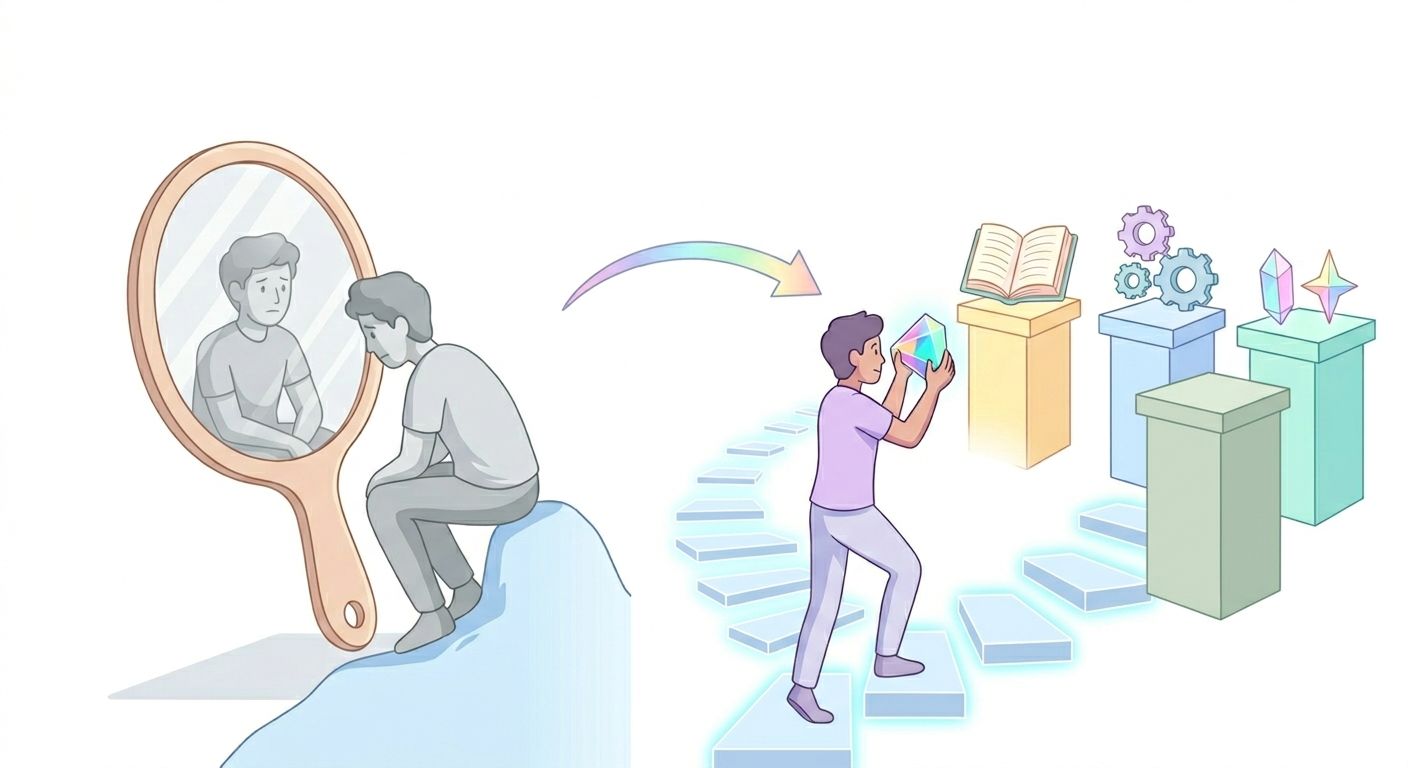

“Life always gets better and Things happen for a reason” people have said this time and time again and you would be right to get frustrated by this because what does it even mean? In retrospect you will find people who believe that their trauma made them who they are, and that without friction there is no finding - that the only justifiable reason for something bad happening to them was because it had the power of making them stronger. On the other hand, you might come across people who will be on the other extreme, they might spend their whole lives naming the event as a tragedy - speaking about how it ruined their lives and would not wish it upon their worst enemy. Most people would stand in the middle of these two extremes and maybe wonder, is it the extremity of events which decide if it was a curse or blessing, is it the person's mindset which decides which perspective to take on or who gets to decide if they're a victim or a person who came out shining after a storm? I have a better question to propose: Who is right? What would be the correct way to look at experiences and how does one colour them into positive and negative, does one quantify life by the glimmers or gloom? The answer is simple - the past is a mirror, if we think of ourselves as the victim, we will see evidence and if we deem ourselves a hero we will find evidence for that too. Life's trajectory is a fact and the meaning of that is variable and in our hands, instead of seeing it as a heavy anchor tying you to a version of yourself - maybe someone who says I am the way I am and someone narrates their life around an event, try wondering What does this experience allow me to understand that someone who hasn't been through it never will? This changes those thoughts to having a sense of agency where things don't happen to you but for you. This is far from glorifying hardships or gaining a badge of honour but more towards understanding that the lens through which we view daily events is how we view lives and choosing to adopt a lens of qualifying your experiences - how it helped you grow, how it brought you closer to people or eliminated the ones not true to you, maybe how it increased resilience, the point is to acknowledge how multi-dimensional experiences can be instead of quantifying it into the number of bad things that happened in your life. By restructuring our thoughts from I am a failure to I failed at this we can stop identifying with our trauma, we can try developing temporal empathy - forgiving ourselves for not knowing things only time could teach and empathizing with our inner selves for pushing through life's harder moments. Changing this narrative of your life and being gentler with ourselves will only lead to acceptance of unfairness and unjust so instead of fighting with ourselves for feeling intensely and acting impulsively we can acknowledge that even emotions like jealousy or anger is meant to be felt - and the only way to get rid of it is to feel it and let go.
Before leaving, please try answering this question for me
Are you looking at your life like a museum -walking through the past, staring at old failures like statues that can’t change, and feeling sad. Or is it more like a library - Visiting the past to look up information, learn a lesson, and then leaving the building to go apply it. Or maybe take this lens - The workshop. Taking the "scraps" of old experiences and building something entirely new out of them.